
Tracey Emin: A Second Life
Tate Modern, London, UK
27 February – 31 August 2026
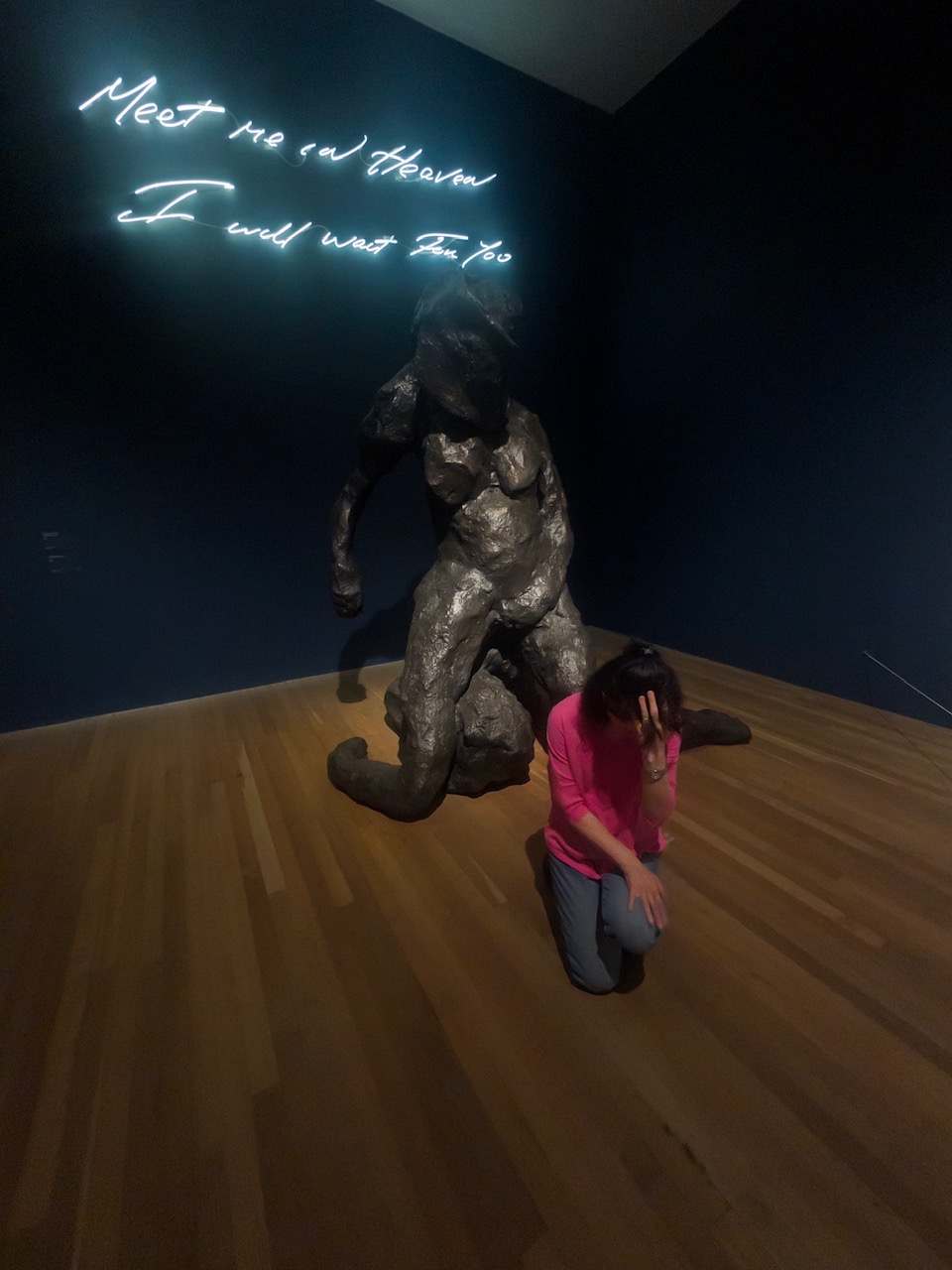
Entering Tracey Emin’s exhibition at Tate Modern feels less like stepping into a retrospective than into an exposed psychological landscape. The atmosphere is raw, intimate and emotionally charged, with visitors moving through the galleries absorbed by works that refuse distance or detachment.
Once the “enfant terrible” of the Young British Artists, Emin is known for autobiographical and confessional work across painting, drawing, video, textile, neon, sculpture and installation. Elected a Royal Academician in 2016, she symbolises the height of the 1990s, its excesses and intensity, but this show is not about that. It is about how she has exposed her life, laid herself bare, and pushed viewers to confront their own emotions in the process.
A Second Life is the most significant exhibition of Emin’s career, tracing the key life events that shaped her transformation. Early works include Tracey Emin CV (1995), a first-person narration of her life up to that moment, and the poignant video Why I Never Became A Dancer (1995), in which she recounts traumatic events from her teenage years in Margate. Also present are works from her first solo show at White Cube, My Major Retrospective 1982–93, comprising photographs of art school paintings she destroyed following an abortion.


That abortion is addressed in one of the most affecting film works I have seen in years. She speaks about the misery she endured, the way people treated her afterwards, the infection she suffered and her near-death experience. Visitors crowded this room, unable to leave before hearing the full account. In the next space, a hospital wristband and a small bottle of mefenamic acid sit beside a display of children’s shoes. The abortion was a seismic moment that changed everything. She destroyed her paintings, locked herself in a studio for three and a half weeks, and started from scratch. That studio is recreated here, covered in scrawled paintings, empty lager cans and dirty laundry.


The quilts, films and installations are the most celebrated works, but the show is full of paintings too. Fractured self-portraits in visceral colours, some covered in fragmentary diaristic texts, show her bleeding, broken in bed or standing fragile on the verge of collapse. They may be repetitive, but they are among my favourites. The sculpture feels primal and undeveloped, ultimately less convincing than the paintings and film works surrounding it. My Bed, the infamous Turner Prize work from 1999, is present, although other works here are far more affecting.


Emin has said that the worst thing in the world is to feel numb. She has often been described as a confessional artist, and at times the exhibition can feel egocentric. Yet in an interview with Maria Balshaw, she rejected the label entirely. She was not confessing, she said, but trying to unravel her experiences and understand where they came from. Her experience of cancer, surgery and disability runs through the later works, treated not as private suffering but as something collective, offered as a way of understanding other lives. She has spoken of finding a strength in this second life that she did not possess before.
The exhibition culminates in large-scale paintings that, despite the pain still present, point towards something more transcendent and spiritual, a determination to live fully in the present.


More than anything, the exhibition reveals the enduring power of emotionally exposed work to draw people in, not through spectacle or intellectual opacity, but through human connection. In a cultural moment increasingly shaped by digital mediation and AI-generated culture, Emin’s work insists on something messier, unstable and unmistakably human.
Leave a Reply