
Soheila Sokhanvari: Rebel Rebel
The Curve, Barbican Centre, London, UK
Fri 7 Oct 2022—Sun 26 Feb 2023
We recently visited the Soheila Sokhanvari exhibition at The Curve, one of the art galleries at the Barbican Art Centre in London. I had not been there for a while, so it was good to rediscover this space, which offers a rich cultural programme and is particularly welcoming during the winter months.
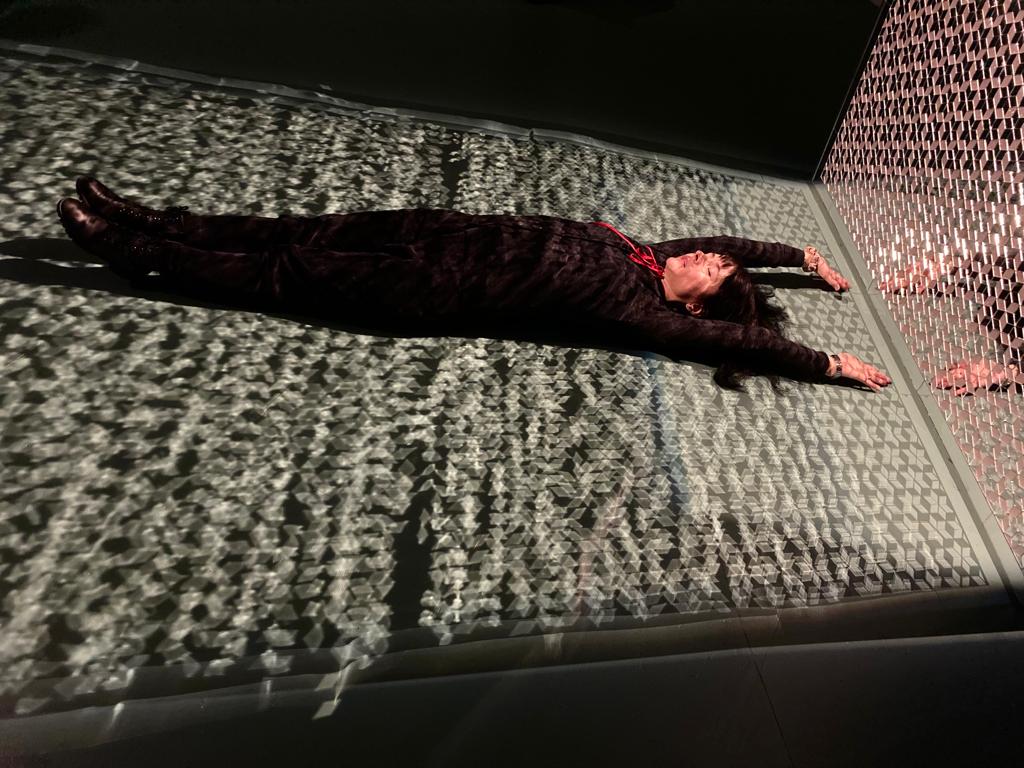
As you enter the exhibition and walk along the 90-metre gallery—where the light is dim and the walls are hand-painted with Islamic geometric shapes—you encounter twenty-seven small portraits of feminist icons from pre-revolutionary Iran. They are painted in the tradition of Persian miniature painting, using egg tempera on calf vellum with a squirrel-hair brush.
The exhibition offers an intimate yet unsettling experience, inviting you to discover the lives of these women by approaching the paintings and their colourful details, even as you realise they belong to a lost era. The works are small in scale and displayed without names or biographical information—only painted numbers—in dark frames set against green murals of geometric crystals.
The fashion depicted and the wallpaper motifs, as well as the fragmented mirror at the start of the corridor, immediately brought the 1970s to mind. Indeed, the exhibition title “Rebel Rebel” borrows from David Bowie’s 1974 cult pop song and pays tribute to the significant courage of these twenty-seven women, who pursued their careers in a culture enamoured with Western aesthetics but not with Western freedoms.
These women include Roohangiz Saminejad, the first unveiled actress to appear in a Persian-language film, who was forced to change her name and lived in anonymity and seclusion after the revolution; the controversial modernist poet Forough Farrokhzad; and the leading intellectual and writer Simin Dāneshvar, among many others. The title also functions as a lament for the fate of these women after the 1979 Iranian Revolution, when the establishment of a conservative Islamic theocracy left them with a stark choice: renounce public life or be forced into exile. A difficult decision faced not only by these women but by many others in the years that followed.
The soundtrack accompanying the exhibition, composed by Marios Aristopoulos, weaves together songs by celebrated mid-20th-century Iranian singers, including Ramesh and Googoosh—a poignant gesture given that broadcasting a woman’s voice remains illegal in Iran. The exhibition ends with a large, extravagant mirrored sculptural form suspended from the ceiling, featuring internal projections drawn from classic Iranian cinema.
The feminist icons in these portraits appear so Westernised that it is almost hard to believe they depict Iranian women. Still, it is worth contemplating these paintings before learning more about their biographies—one can appreciate them in their visual splendour before confronting their post-revolutionary fates. Many artists of their generation chose to “repent” and continue working with the regime in alignment with its agendas. However, most of the women portrayed in this exhibition chose to stand by their beliefs, even if it meant withdrawing from public life. For example, Simin Dāneshvar continued to write after the revolution and refused to cooperate with the regime whenever they attempted to use her for propaganda.
This exhibition is particularly timely, as Iran’s current unrest dominates headlines worldwide. Forty-three years after the revolution, the situation for women in the country has only worsened. Several Iranians have been sentenced to death during the nationwide protests sparked by the death of 22-year-old Mahsa Amini, who died after being apprehended by the state’s morality police for allegedly wearing her hijab improperly. Although it is difficult to believe that the current regime will fall in the wake of these protests, change is long overdue—so let us hope it arrives soon.
Admission: Free.


Leave a Reply