
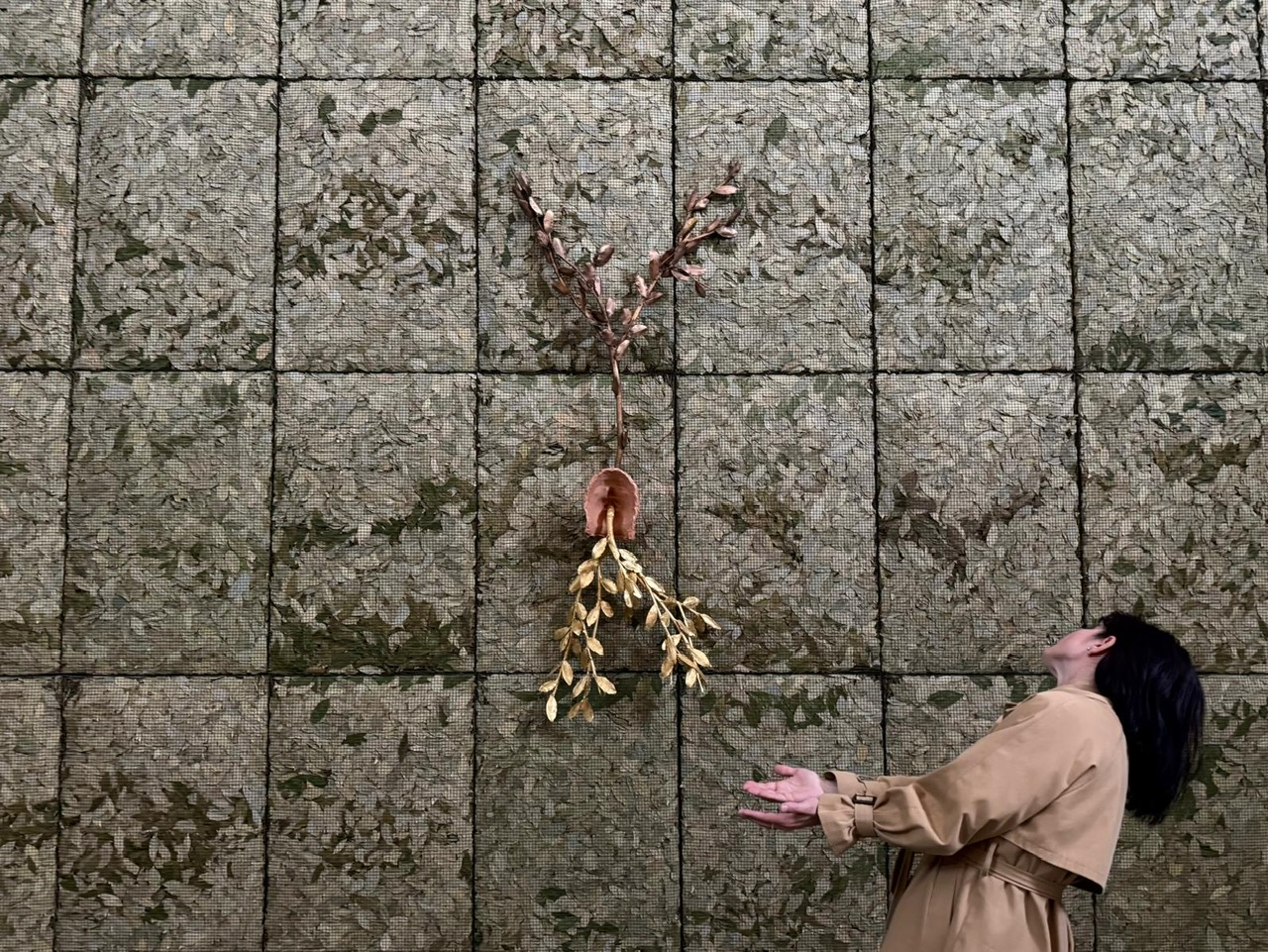
Giuseppe Penone: Thoughts in the Roots
Serpentine South Gallery, London, UK
3 April – 7 September 2025
This exhibition at the Serpentine Gallery in London truly resonated with me. I am deeply interested in the poetic relationship between humans and nature, and I have always been drawn to trees. I love standing beneath them, trying to absorb their energy.
Giuseppe Penone is a key figure in the Arte Povera movement, a term coined by art critic Germano Celant in 1967. Meaning “Poor Art,” it refers to artists’ use of simple, everyday materials. Born in Italy in the late 1960s, the movement celebrates natural materials and artistic process, emerging as a response to consumer culture through unconventional and raw forms.
Penone’s sculptures, installations, and drawings are rooted in process. He has experimented with materials such as wood, wax, iron, bronze, terracotta, marble, and plaster, consistently revealing their physical qualities. His work seeks to unify art and nature, assimilating the natural world into his artistic practice.
In Thoughts in the Roots, Penone transforms the gallery into a space for reflection on the nature outside—visible through the windows and deeply connected to Kensington Gardens. It feels like a perfect fit, as the gallery becomes an extension of the park. The exhibition spans works from 1969 to the present, including drawings, photographs, sculptures, and installations that showcase Penone’s deep and sustained observation of nature.
Trees are a recurring motif in Penone’s work. Fittingly, the exhibition extends beyond the gallery, with three monumental bronze sculptures installed outdoors near the South Gallery. Penone describes the tree as “the primal and most simple idea of vitality, of culture, of sculpture.”
As you approach the gallery, you encounter sculptures in the gardens that resemble trees. Albero Folgorato (Thunderstruck Tree) is based on a Belgian willow struck by lightning. Cast in bronze and lined with gold leaf, the sculpture captures the invisible forces of nature that shape form and structure. Positioned outdoors, the piece is accessible to all passersby.


Another outdoor work, Idee di pietra (Ideas of Stone), explores the relationship between river stones and thought. Large stones are balanced on the forks of bronze tree branches, suggesting both weight and contemplation.

Inside the gallery, A occhi chiusi (With Eyes Closed) invites reflection on the connection between sight and introspection. Made with acacia thorns on canvas, it suggests a sensory synthesis between vision and nature.


The room I found most moving—almost like a sacred space—was dimly lit and housed the installation Respirare l’ombra (To Breathe the Shadow). Penone covered the walls with cages filled with laurel leaves, which he says absorb sound, creating a meditative quiet. The scent of laurel fills the space, inviting deep sensory engagement. For Penone, breathing is sculptural—fluid and invisible, yet essential from our first to our last breath.


In this same room is Alberi Libro (Book Trees), a sculptural work created using white fir, cedar, and larch wood. It consists of twelve carved saplings placed side by side, serving as a tangible record of time. Penone carved into the beams to reveal the form of the tree within, as if opening a book. The title plays on the Italian word libro (book), which echoes legno (wood), referencing our use of trees as a medium for writing. In this work, the tree itself becomes the sculpture.


In the West Gallery, Pressione (Pressure) is a large charcoal wall drawing of a magnified skin imprint. Though drawn by hand, the markings resemble those left by branches or foliage, connecting human gesture with the textures of nature.


In the East Gallery, the Verde del Bosco (Green of the Woods) series features frottages made with pigments sourced directly from plants. These rubbings bring the forest onto the canvas—green taken straight from the leaves.


This exhibition invites us to slow down and reconnect—with nature, with ourselves, and with the present moment. Penone encourages us to observe the world with renewed attention, to sense the spirit of place, and to recognize ourselves as part of a larger whole.
Encountering his sculptures in the park before entering the gallery completed the experience for me, creating a journey of contemplation, stillness, and reconnection.
Leave a Reply